
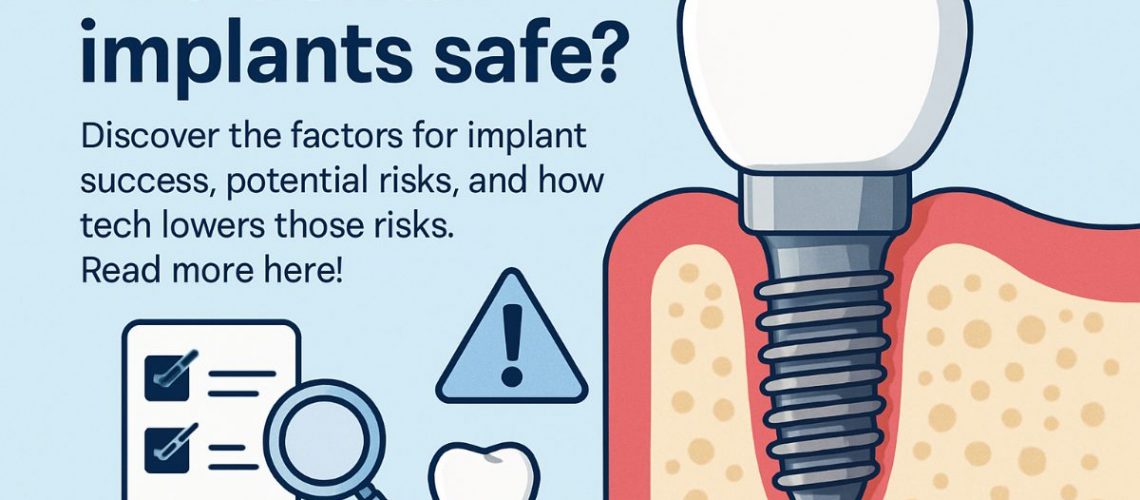
Are dental implants safe? In plain terms: yes, for most people dental implants are a safe and reliable way to replace missing teeth. This article explains why implants work, who is a good candidate, common risks and how modern tech lowers those risks. We’ll also cover what to expect during surgery and recovery, questions to ask your dental team, and how Parkchester Oral & Maxillofacial Surgery Associates coordinates care with your general dentist.
Are Dental Implants Safe? A Quick Overview
Dental implants have high success rates—often above 90–95% over many years when placed and maintained properly. They fuse with the jawbone (osseointegration) and act like natural tooth roots. Because of predictable outcomes and proven materials, implants are a standard, safe option for tooth replacement. If you’re wondering “are dental implants safe in the Bronx, NY,” local surgical centers use the same global standards and technologies that make implants successful everywhere.
Who Is a Good Candidate for Dental Implants?
Good candidates are generally healthy adults with sufficient jawbone and good oral hygiene. Several health and lifestyle factors affect safety and success.
Age and medical history
Age alone is not a barrier. Controlled chronic conditions—like well-managed diabetes—often still allow safe implant placement. Uncontrolled illnesses, certain medications (like some bone drugs), or immunosuppression can raise risks and need careful review with your surgeon and physician.
Bone quality and quantity
Adequate bone is essential so the implant can integrate. If bone volume or density is low, bone grafting can rebuild support before or during implant placement. Proper assessment of bone reduces the chance of implant failure.
Common Risks and Complications
Like any surgery, implants carry risks, though serious problems are uncommon.
Infection and peri-implantitis
Infections can occur around implants (peri-implantitis). Signs include redness, swelling, pain, or loosening. Good oral hygiene, regular dental visits, and prompt treatment of gum disease help prevent infections.
Nerve damage and sinus complications
Rarely, implants placed too close to nerves can cause numbness or tingling. Upper jaw implants can affect sinuses if not planned well. These issues are usually identified and managed early with imaging and proper surgical technique.
Implant failure and what causes it
Failure can result from smoking, poor bone, untreated gum disease, uncontrolled medical conditions, or loading the implant too soon. Following the surgeon’s instructions on healing and care lowers failure risk.
How Modern Technology Reduces Risk
3D imaging and virtual planning
CBCT scans give a 3D view of bone and nerves so surgeons plan safe implant positions before surgery.
Guided surgery and stability testing
Surgical guides placed from virtual plans help position implants exactly. Stability testing (like Osstell) checks if implants are ready for the next step.
Advanced grafting and healing aids
Techniques such as L-PRF, PrGF, and guided tissue regeneration speed healing and improve bone support for implants.
What to Expect During Surgery and Recovery
Surgery is often done with local anesthesia, sedation, or general anesthesia depending on complexity. The surgeon places the implant post and sometimes the abutment. Recovery usually involves a few days of swelling and soreness, with most people returning to normal activities in a week. Your oral and maxillofacial surgeon places the post and abutment and works with your general dentist for the final crown or prosthesis.
Questions to Ask Your Dental Team
Ask about the surgeon’s experience, success rates, use of CBCT and guided systems, whether they use stability testing and growth factors, who will make your final crown, and the post-op follow-up plan.
About Parkchester Oral & Maxillofacial Surgery Associates
Parkchester OMFS Associates are board-certified oral and maxillofacial surgeons in the Bronx with decades of experience and thousands of implants placed. They use CBCT, guided implant planning, L-PRF/PrGF grafting, and stability testing to improve safety and outcomes. They coordinate care with your general dentist for the final restoration.
Conclusion — Making an Informed Choice
Dental implants are safe for most patients when evaluated, planned, and placed properly. You can reduce risks by disclosing health history, quitting smoking, keeping good oral hygiene, and choosing a surgeon who uses modern imaging and grafting techniques. Schedule a consultation to review your specific risks and next steps with your dental team.