
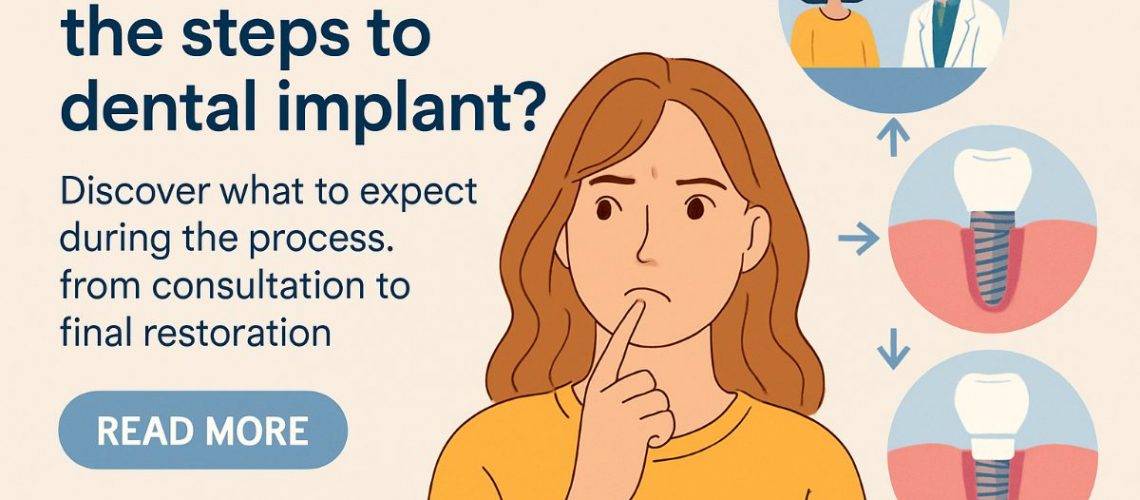
If you’re researching the steps to dental implant, this post walks through the full process so you know what to expect. You’ll learn how the team evaluates your mouth, plans treatment with 3D imaging and guided surgery, performs the implant post and abutment placement, and coordinates with your general dentist for the final crown. Parkchester Oral & Maxillofacial Surgery places the implant post and abutment and works directly with your restorative dentist for the prosthesis.
Step 1: Initial consultation and diagnostic imaging
The visit starts with an exam and a review of your medical and dental history. Expect questions about medications, past surgeries, and habits like smoking that affect healing. Accurate planning relies on 3D CBCT imaging, which shows bone volume, nerve positions, and sinus anatomy. High-quality imaging lets surgeons plan safe, precise implant placement and avoid surprises during surgery.
Step 2: Personalized treatment planning
Virtual planning and guided surgery
Using virtual planning software, the surgical team maps the ideal implant position for function and appearance. Technologies like nSequence® guided implant technology create a customized surgical guide that fits your mouth and directs the drill and implant to the planned angle and depth. Guided surgery improves accuracy, reduces risk, and often shortens procedure time.
Assessing need for grafts or extractions
Planning also identifies whether you need extractions, bone grafting, sinus lifts, or soft tissue work before implants. If bone is too thin or low, grafts or guided tissue regeneration may build support so the implant will integrate well. Some cases require staged treatment; others allow implant placement the same day as extraction.
Step 3: Pre-surgical preparation
Before surgery you’ll get clear pre-op instructions about eating, medications, and arrival time. Sedation and anesthesia options range from local anesthesia to IV sedation depending on your comfort level and the complexity of the case. Advanced healing aids such as PRGF or L-PRF (made from your blood) can be planned to support grafts and speed recovery.
Step 4: Implant placement surgery
On surgery day the surgeon places the titanium implant post into the jawbone. Guided placement with a surgical guide helps ensure the post goes precisely where it was planned. Most single-implant placements take less than an hour in the office; more complex full-arch cases take longer. After surgery you’ll receive post-op care instructions covering pain control, swelling, diet, and oral hygiene.
Step 5: Healing and osseointegration
Healing usually takes several weeks to a few months as the bone grows around the implant — a process called osseointegration. Normal signs of recovery include mild swelling and gradual reduction of soreness. Your team may use Osstell IDX® testing to noninvasively measure implant stability and confirm when the implant is ready for the next step.
Step 6: Abutment placement and handoff to your general dentist
Once the implant is stable, the surgeon places the abutment, which connects the implant post to the crown. Parkchester Oral & Maxillofacial Surgery places the post and abutment and then coordinates with your general dentist or restorative specialist for the final prosthesis. Your dentist will take impressions or digital scans and make the crown, bridge, or denture that attaches to the abutment.
Step 7: Final restoration and ongoing care
When your general dentist places the final crown, they will check fit, bite, and appearance. You may need a few bite adjustments to make chewing comfortable. Long-term success depends on routine oral hygiene, regular dental checkups, and professional cleanings. Avoid tobacco and follow any maintenance guidance from your dental team to protect your new implant.
When additional procedures may be needed
Some patients require bone grafts, guided tissue regeneration, or repeat surgery if complications arise. The surgical team evaluates risks and discusses options up front, so you’ll know whether staged treatment or additional procedures are likely before starting.
Why choose Parkchester Oral & Maxillofacial Surgery Associates for implant surgery
Parkchester OMFS brings decades of experience and advanced technology to implant care. The team includes board-certified oral and maxillofacial surgeons who have placed thousands of implants using CBCT imaging, nSequence® guided planning, L-PRF and PRGF healing techniques, and Osstell IDX® testing. They focus on surgical precision, safety, and clear coordination with your general dentist for a smooth handoff to the restorative phase.
Next steps: scheduling a consultation
Ready to learn your specific steps to dental implant in the Bronx? Call to book a consultation. Bring a list of current medications, any recent dental records and X-rays if available, and the name of your general dentist so we can coordinate care. During the visit you’ll get a personalized plan, cost estimate, and answers about anesthesia and recovery. Parkchester OMFS will handle the implant post and abutment placement and work with your dentist to complete your new smile.