
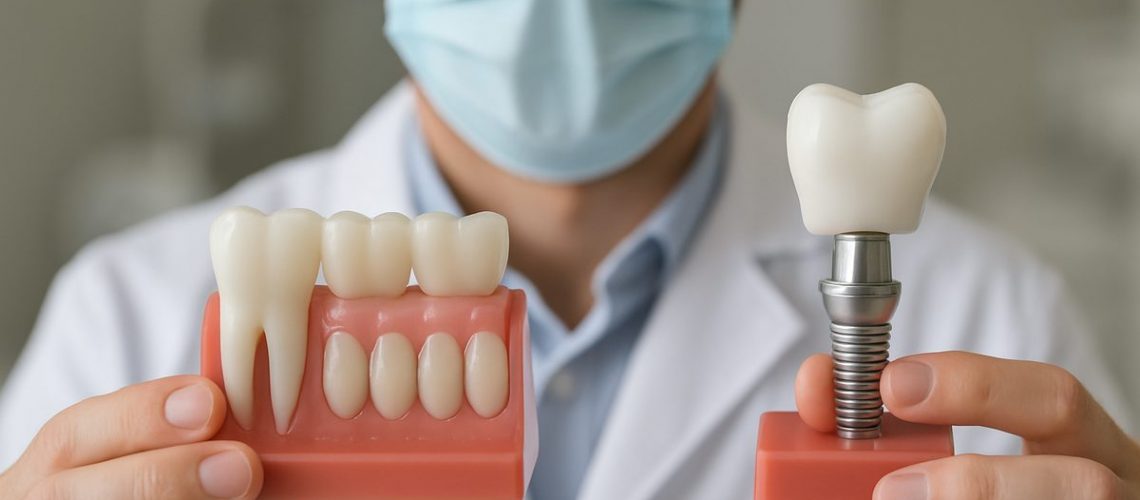
This post compares a tooth stent to a dental implant so you can see when each is used, how they differ, and what to expect. A tooth stent is a device used either as a surgical guide for implant placement or as a temporary tooth replacement after extraction. Calling it a “tooth stent in the Bronx, NY” just means the same devices and techniques are available locally; understanding both meanings prevents confusion when your surgeon or dentist mentions a stent.
What is a "tooth stent"?
A tooth stent can mean two things. First, it can be a surgical guide made from 3D scans that helps the surgeon place an implant precisely. Second, it can be a provisional or removable temporary tooth used right after extraction so you don’t go without a tooth while you heal.
Surgical guide meaning
A surgical tooth stent in the Bronx, NY is often 3D printed from CBCT scans and digital plans. It fits over your teeth or gums and has holes that guide the drill’s path, angle, and depth. That makes implant placement more precise and safer.
Provisional/temporary meaning
A temporary tooth stent is a removable or bonded provisional that restores appearance and basic function after a tooth is removed. It protects the site and lets you eat and speak more normally while tissue and bone heal.
What is a dental implant?
A dental implant is a permanent system to replace a missing tooth. It has three parts: the implant post (a metal fixture placed into bone), an abutment that connects the post to the visible tooth, and the crown or bridge that looks like a real tooth. The full process includes planning, placing the post, months of healing for the bone to fuse (osseointegration), and then the final restoration.
Who does what
Oral surgeons place the implant posts and sometimes abutments. A general dentist usually makes and places the final crowns or bridges. Good communication between both providers gives the best result.
Key differences: tooth stent vs dental implant
Purpose: A tooth stent (guide or provisional) helps with planning, placement, or short-term esthetics. A dental implant replaces the tooth root for a long-term solution. Permanence: Stents are short-term or procedural tools; implants are permanent. Invasiveness: Stent use is non-surgical or minimally invasive; implant placement is surgery. Cost: Stents are relatively low cost; implants are higher because they include surgery, hardware, and the final prosthesis.
Timeline and healing
A tooth stent is immediate or short-term. An implant requires months: planning, placement, 3–6 months for osseointegration, then restoration.
Risk and reversibility
A stent is reversible and low risk. Implants are surgical, carry surgical risks, but are intended to last many years when done correctly.
When is a tooth stent used?
Common uses for a tooth stent in the Bronx, NY include guided implant surgery, immediate temporary teeth after extraction, protecting surgical sites, and testing esthetics and function before the final tooth is made.
Benefits of using a surgical tooth stent
Surgical stents improve accuracy, shorten surgery time, and help plan the best esthetic outcome.
What to expect during implant treatment and teamwork between providers
Expect CBCT imaging and virtual planning. A surgeon places the implant post, you heal, then your general dentist fits the final crown. Clear communication and shared plans ensure the post is positioned for the best prosthetic result.
When a stent matters in that workflow
A surgical tooth stent is used during planning and surgery; a provisional stent is used right after extraction to protect the site and give you a temporary tooth while healing finishes.
Choosing the right provider
Ask about CBCT imaging, guided surgery experience, and how the team coordinates care. Parkchester Oral & Maxillofacial Surgery Associates in the Bronx places implant posts and abutments and works with your general dentist for the final prosthesis. Their board-certified surgeons, including Dr. Marlon K. Moore, use CBCT, nSequence guided implant tech, L-PRF, Osstell testing, and plasma-rich growth techniques to improve planning, placement, and healing.
Quick takeaway and next steps
A tooth stent is a guide or temporary tooth used short-term; a dental implant is a surgical, long-term root replacement. If you’re weighing options, schedule a consultation to review whether a tooth stent, an implant, or both are right for you and to coordinate care between your surgeon and general dentist.